
Reading Level 2 Like a Prop Trader: Queue, False Depth, Refresh Behavior
TL;DR — Reading Level 2 is not about staring at displayed size. It's about testing whether displayed size is real — does it refresh after being hit, does it move out of the way when challenged, does the queue clear faster on one side than the other. The first-time Level 2 user looks for big numbers. The prop trader looks for queue stability, refresh behavior, and false depth. Same screen, completely different read.
Level 2 (market depth) shows resting orders at successive price levels beyond the inside quote. To a beginner, the heaviest displayed sizes look like the strongest support or resistance. To anyone who's traded through a real test of those levels, displayed size is the least reliable variable on the screen. Most of what matters is the behaviour around the displayed numbers, not the numbers themselves.
What we actually read
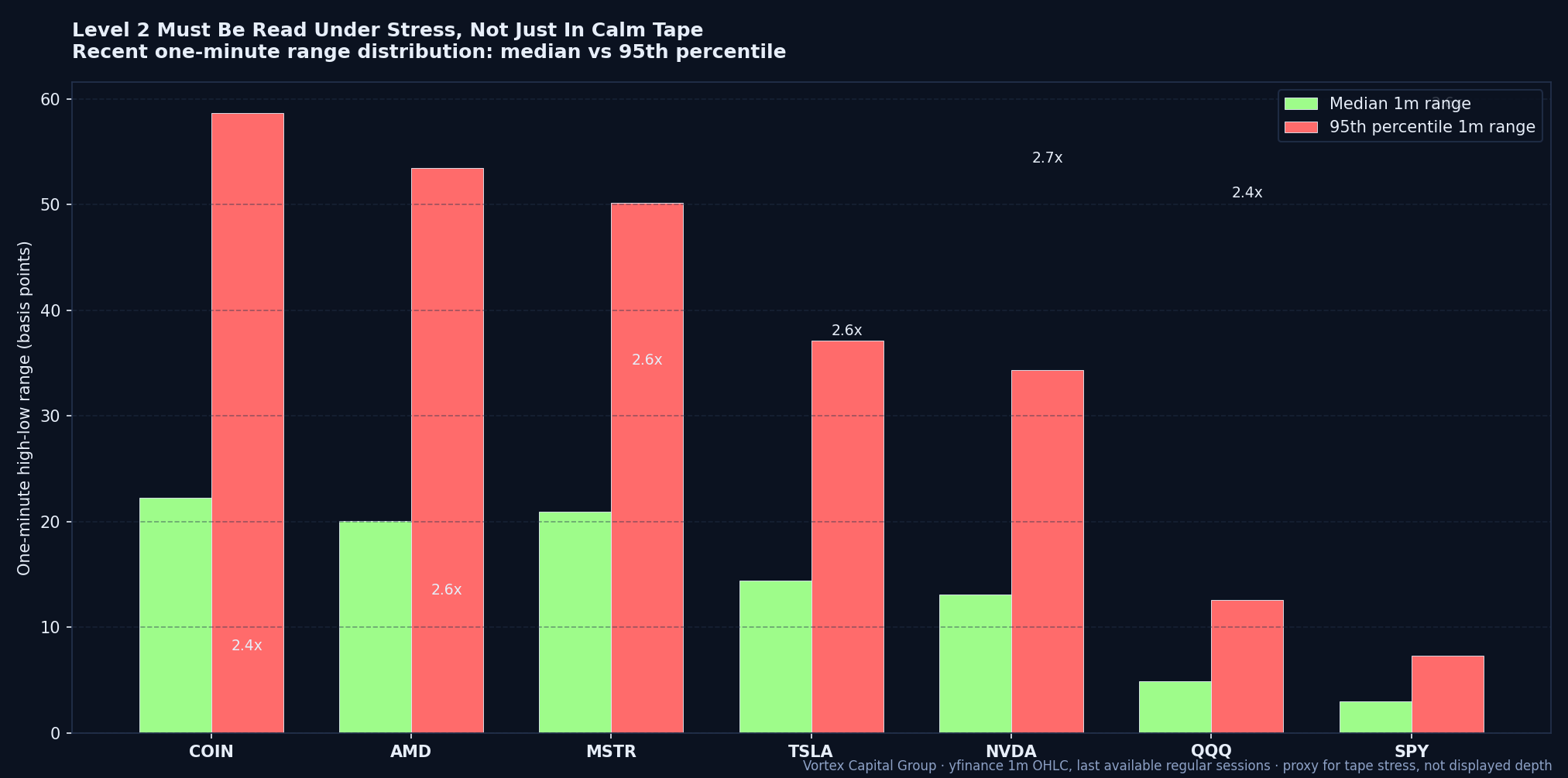
- Queue refresh. Does displayed size at a level reappear after being lifted, or does it pull and re-show worse? Real liquidity refreshes; false depth flickers.
- False depth around news. Large displayed orders that disappear as soon as the price approaches them are not support — they're algorithmic placeholders designed to influence other algorithms. The pattern is detectable: displayed size that consistently cancels within 100ms of a probing order.
- Queue position realism. A trader's own passive limit order has a queue position that determines fill probability. Joining a 50,000-share displayed line near the inside often fills near last; joining a 500-share line typically fills first. Beginners pay for the wrong queue position constantly.
- Asymmetric clearing. One side of the book may be clearing faster than the other — bids getting hit and not refreshing, while offers stay heavy. This is the precursor to a directional move, and Level 2 shows it before the candle confirms.
- Hidden iceberg behaviour. Some displayed sizes are tips of icebergs — they get hit, the size refreshes at the same level, and the actual fill quality is poor for the trader trying to sweep through. Dark Pool Liquidity covers when to interact with hidden vs displayed liquidity.
The four questions before trusting Level 2 as a signal
-
Is the inside quote stable, or flickering by ones and twos? Stable inside = real book. Flickering = algorithmic noise.
-
When the inside lifts, does the next displayed level refresh? Refresh = real liquidity behind the inside. No refresh = thin book waiting to gap.
-
Are bid and offer clearing at similar rates, or is one side overwhelmed? Asymmetric clearing precedes directional moves more reliably than the displayed depth itself.
-
Does the trader's intended order size fit the available depth, or will it cause its own impact? Smart routing helps, but only if the trader knows the book is genuinely deep — see Smart Routes vs Manual Routes.
Related
Dark Pool Liquidity · Smart Routes vs Manual Routes · DMA vs Retail Broker Execution · PFOF Tax.
Joining the desk
Traders who already evaluate displayed depth by refresh behaviour rather than displayed size are running a desk-grade Level 2 process. The trader application takes about ten minutes.
#Level2 #OrderBook #MarketMicrostructure #DayTrading #DMA #QueuePosition #DepthOfBook #PropTrading #VortexCapitalGroup
Trade with the desk behind the research
Vortex Capital Group gives qualified traders DMA via Sterling Trader Pro, multi-vendor HTB locates, smart and dark-pool routing, and an 80%+ monthly profit share.
Apply to Trade